New workshop.
Old methods.
A small workshop in Islamabad. A few patient hands. We started in late 2025 with a fresh take on the leather wallet — modern precision where modern precision matters, traditional finishing everywhere else.
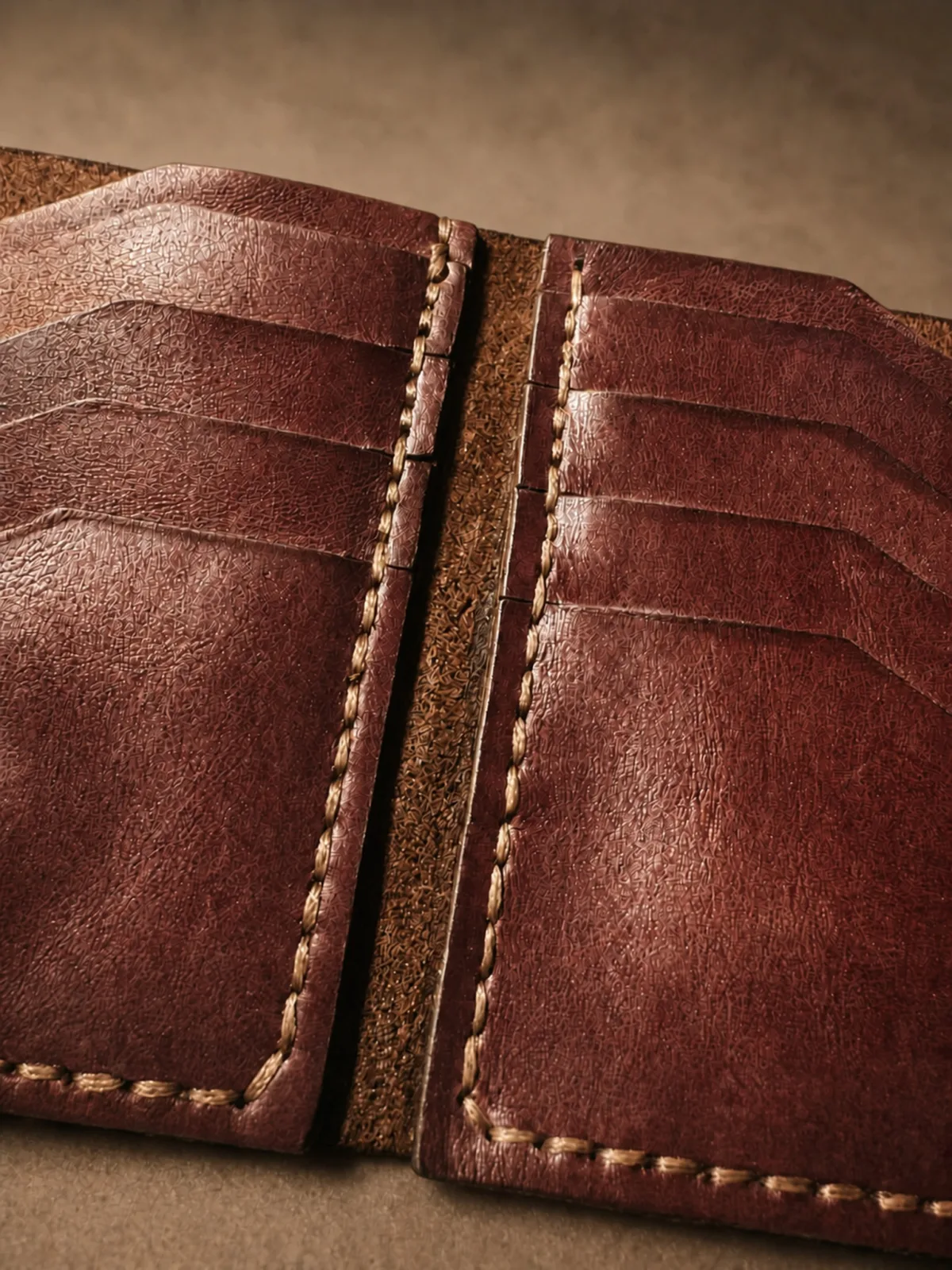
A small workshop, founded in 2025.
Levoro is a new workshop. We opened the doors in late 2025 in Islamabad, Pakistan, with one laser cutter, a few stitching ponies, edge slickers, and a stack of full-grain veg-tanned hides from Kasur — one of the world's oldest and most respected leather regions, just down the road from us.
We're not a heritage brand. We don't have decades behind us. What we do have is a clear opinion about how a leather wallet should be made: laser-cut for precision so the geometry is exactly right, then finished entirely by hand. Saddle-stitched two-needle in waxed polyester thread. Edges sanded, sealed with beeswax, burnished smooth with cloth and friction — not chemicals.
It takes longer than mass production. It costs more than glued imports. The wallets that come out the other side are the kind you carry for years and watch get better.
Three things, no more.
We've kept the list short on purpose. Every decision in the workshop comes back to one of these.
Materials that earn their keep
Full-grain leather only — no corrected grain, no bonded leather, no shortcuts. Our hides are vegetable-tanned in Kasur, Pakistan, finished slowly with bark and time. Thread is Ritza 25 Tiger waxed polyester, the kind that holds a saddle stitch for decades. Hardware, where we use any, is an antique brass snap.
Modern + traditional, honestly
We use a laser cutter for the leather panels because precision at the millimetre matters more than the romance of cutting by knife. Everything after the cut is done by hand: skiving, saddle stitching, edge sealing, beeswax burnishing. Modern where modern is better. Traditional where it counts.
Honest about what we are
We're a small workshop, founded in late 2025, building our reputation one wallet at a time. We don't have a heritage to lean on. What you see in the photos is what you get in the box. If something goes wrong, send it back — we'll repair or replace it.
From our software to our laser.
We draw our patterns in software we built. It has one job: wallets that sew true. It lays out every leather piece, places each stitch hole so the holes on every layer line up when the pieces are stacked, and writes the file our laser cuts from. It also folds and sews each design in a 3D simulation, before any leather is cut.
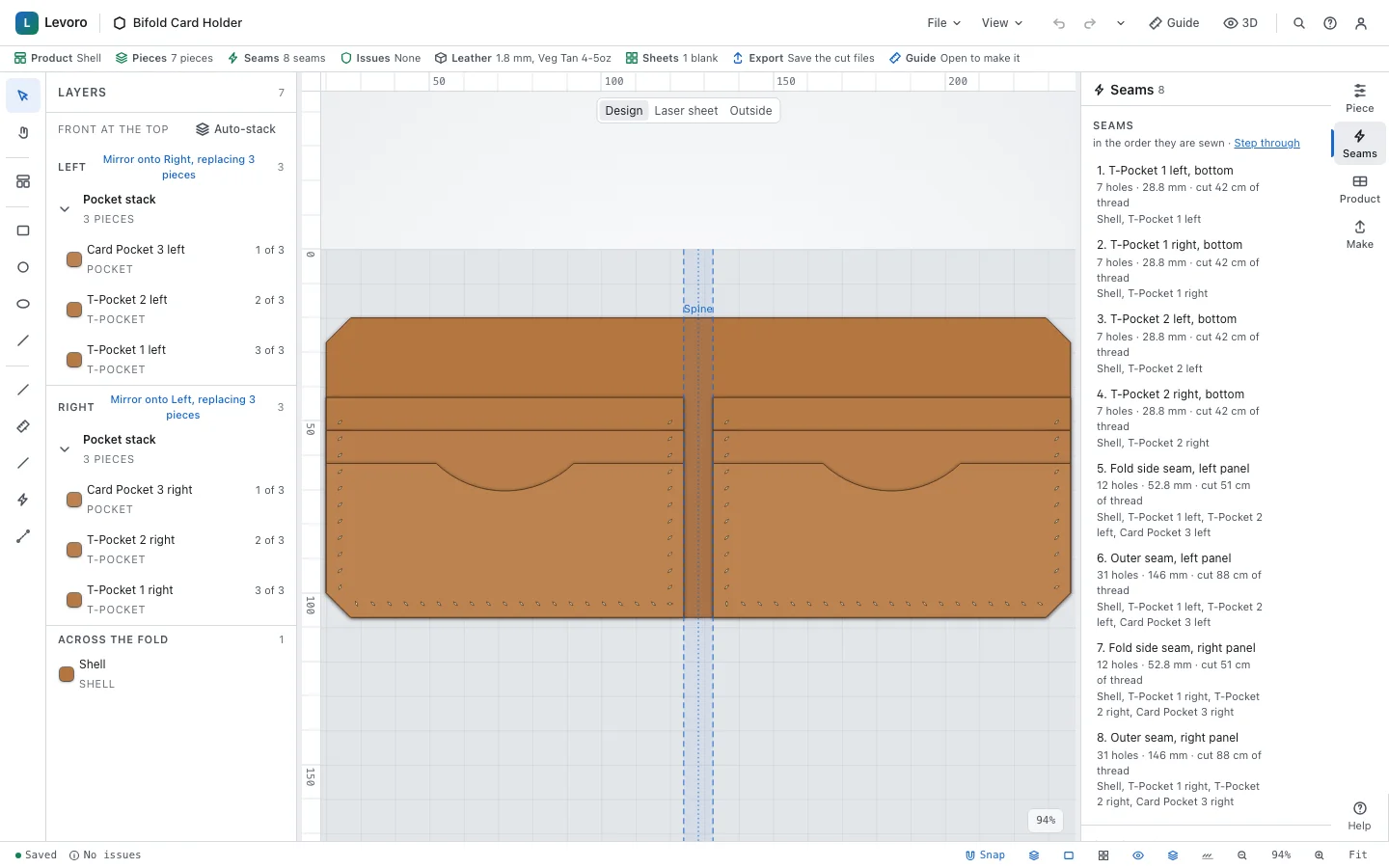
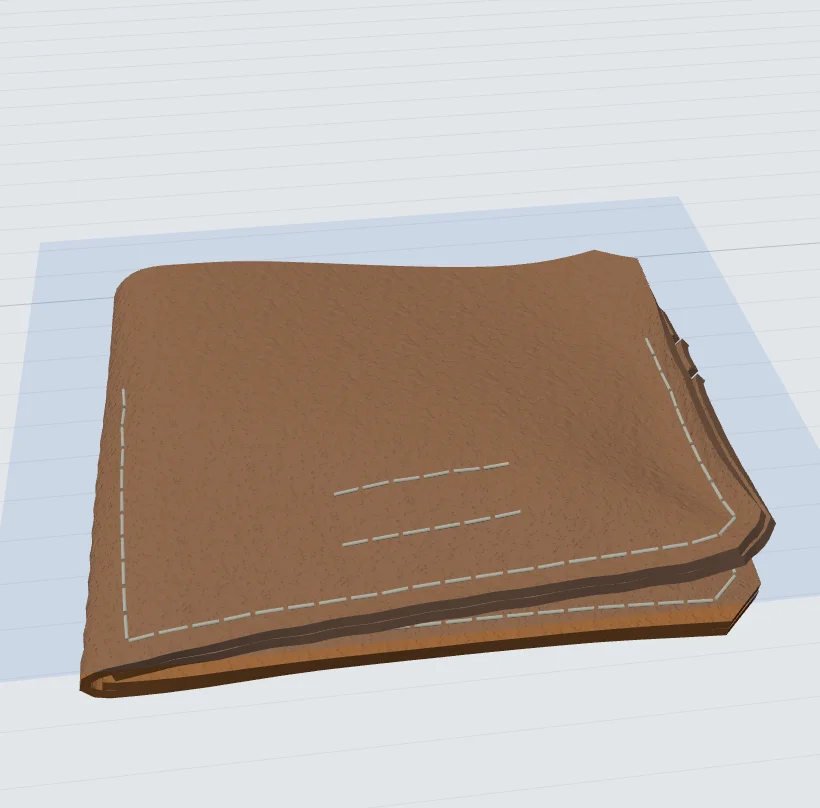
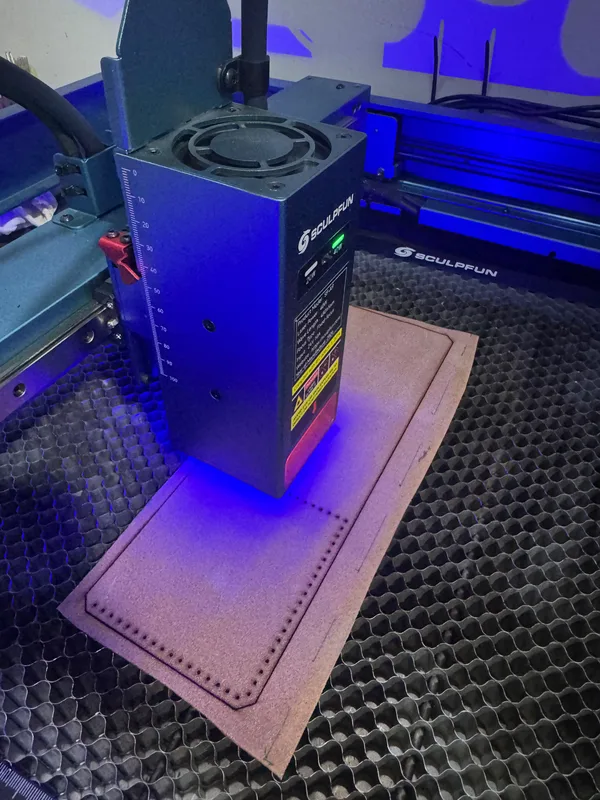
Six steps, one wallet, by hand.
Here is what happens between the hide arriving from Kasur and the wallet in the box that ships to you.
Selecting the hide
We start at the back. Full-grain leather from the back of the hide is the densest, strongest, and most uniform — we avoid bellies and shoulders for the load-bearing pieces. Each hide is inspected by hand for scars, brand marks, and grain pattern before any pattern is laid out.
Laser cutting
This is the modern step, and we don't apologise for it. A laser cutter holds tolerances a knife can't, and on a wallet that means card slots that line up across panels and chamfered corners that match exactly side to side. We arrange the digital pattern on the hide by eye to follow the grain and avoid weak spots, then cut the panels in a single pass.
Edge prep and skiving
Edges that will be folded or stacked get skived by hand — thinned with a sharp blade so the seam lies flat and the wallet stays slim. This is the step you can't see but feel for years.
Saddle stitching
Stitch holes are set 4.8 mm apart, then sewn with two needles working in opposite directions through every hole, locking each stitch, in waxed polyester thread. Done by hand at the bench — the slowest part of the build and the part that makes the wallet last.
Edge finishing
Edges are sanded smooth, sealed with leather sealant, then burnished with a cloth and beeswax until they're glassy and water-resistant. Cheap wallets paint their edges; ours are sealed by friction, wax, and heat.
Inspection and conditioning
Every wallet gets a final once-over before it leaves the bench: stitch count, edge consistency, panel alignment. Then a thin coat of conditioner, a quick brush, and into the box.
"New doesn't mean less careful."
"We started Levoro with one bet: that the most precise modern tools — laser cutters, digital patterns — used together with the most patient old methods, can make a better wallet than either approach alone. Every piece passes through a machine for what it does best, then through three or four pairs of hands for everything else. We're a small team in Islamabad, founded in late 2025, building this slowly. Honest about what we are."